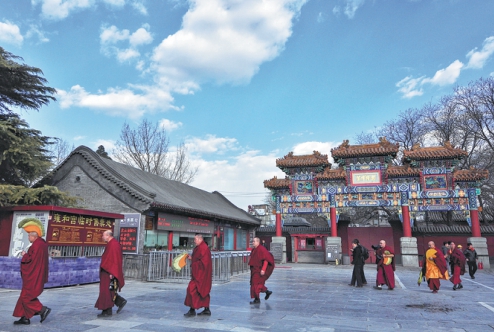
Lama Temple in Beijing
Overview
The Lama Temple, also known as Yonghe Temple or Yonghe Lamasery, is a renowned Tibetan Buddhist temple located in Dongcheng district, Beijing, China. It is one of the largest and most significant Tibetan Buddhist monasteries in the world and serves as a pivotal cultural and religious site in the city. The temple's architecture combines Han Chinese and Tibetan styles, providing a unique fusion that attracts both tourists and devout Buddhists.
Historical Background
The Lama Temple was originally built during the Qing Dynasty in 1694 as a residence for Prince Yong, who later ascended the throne as Emperor Yongzheng. In 1744, it was converted into a lamasery and became a center for Tibetan Buddhism. The temple has remained an important religious site, with successive emperors playing a role in its upkeep and expansion. It survived the "cultural revolution" (1966-76) largely unscathed, due in part to its historical significance and the protection of influential political figures.
Architectural Features
The Lama Temple in Beijing is a masterpiece of traditional Chinese architecture, with a unique blend of Han Chinese and Tibetan styles reflecting its historical role as both an imperial palace and a Tibetan Buddhist temple. The temple complex is an exquisite representation of symmetrical, classical Chinese architectural design, with a north-south axis layout that is common in imperial architecture.
The main structures of the temple include the Hall of the Heavenly Kings, the Hall of Harmony and Peace, the Hall of Everlasting Blessings, the Hall of the Wheel of the Law, and the Pavilion of Ten Thousand Happinesses. Each hall is distinct in its architectural grandeur and artistic embellishments. Intricate wooden carvings, vibrant murals, and elaborate roofs with upturned eaves adorn the halls, showcasing exquisite craftsmanship and the temple's architectural magnificence.
The Hall of the Wheel of the Law is particularly noteworthy. It features a large bronze statue of Tsongkhapa, the founder of the Gelug school of Tibetan Buddhism, and intricate paintings and sculptures depicting various Buddhist deities. The Pavilion of Ten Thousand Happinesses is another highlight, housing a towering 26-meter tall statue of the Maitreya Buddha, carved from a single piece of white sandalwood. This statue is recognized by the Guinness Book of World Records as the largest wooden Buddha statue in the world.
The architectural design of the Lama Temple is not just limited to its grand halls but extends to its smaller courtyards, vibrant gardens, and the array of colorful decorations and ornaments that grace the temple's interiors and exteriors. The temple's harmonious blend of architectural styles and cultural elements reflects the fusion of Han and Tibetan influences, making it a unique cultural and historical monument in Beijing.
Cultural Significance
The Lama Temple is not only a place of worship but also a cultural hub that attracts scholars, historians, and tourists interested in Tibetan Buddhism and Chinese heritage. The temple hosts various religious ceremonies and festivals throughout the year, drawing attendees from around the world. It serves as a center for the study of Tibetan Buddhism and hosts a range of cultural events aimed at promoting understanding and appreciation of this religious tradition.
Modern-Day Relevance
Today, the Lama Temple continues to be an active place of worship and a popular tourist destination in Beijing. It provides insight into the spiritual practices of Tibetan Buddhism and offers visitors a glimpse into the rich cultural tapestry of China's religious history. The temple is also a key site for artistic inspiration, as demonstrated by contemporary artists like Jean-Charles Pigeau, who incorporates elements of Chinese Buddhism in his works.
Art and Exhibitions
The Lama Temple has inspired various artists, including the French sculptor Jean-Charles Pigeau, who has created works reflecting his interpretation of Chinese Buddhism. Exhibitions featuring Pigeau's art include representations of Buddhist architecture and iconography, highlighting the temple's influence on contemporary art. These exhibitions provide a platform for cross-cultural dialogue and showcase the temple's role as a muse for artistic expression.
Visitor Experience
Visitors to the Lama Temple can explore its rich history and spiritual atmosphere by touring the numerous halls and courtyards. The experience is often enhanced by participating in guided tours that provide deeper insight into the temple's religious and cultural significance. The temple also offers unique activities such as stamp collecting, where visitors can obtain stamps from different halls within the temple, turning their visit into an interactive and memorable experience. Article reference1. Stamps of approval. chinadaily.com.cn. 20242. French sculptor creates work reflecting Chinese sensibilities. chinadaily.com.cn. 2019Photo Gallery(2 pictures)CategoriesCultural HeritageTagHistorical BuildingWorld Heritage in ChinaCatalogue1. Overview2. Historical Background3. Architectural Features4. Cultural Significance5. Modern-Day Relevance6. Art and Exhibitions7. Visitor Experience- - - []








